
Opera cake is the kind of dessert that stops people mid-conversation when you carry it to the table. Thin almond sponge, silky coffee buttercream, rich chocolate ganache, and a glaze that looks like polished glass. It satisfies the deepest cake craving in a single slice.
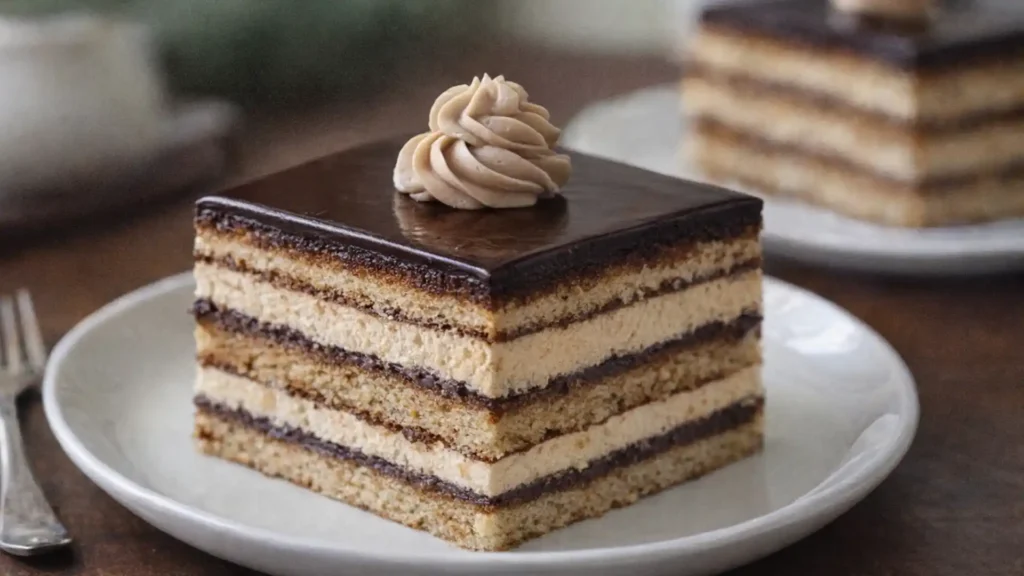
Yes, it has several components. But with the right technique and six key secrets built into every step, this is far more achievable than it looks, even for first-timers. One of those cakes fancy bakers keep returning to, for good reason.
Table of Contents
What Is Opera Cake? A Beloved French Classic
Opera cake is a rectangular French layered cake built from almond sponge, coffee buttercream, chocolate ganache, and coffee syrup, finished with a mirror chocolate glaze. It comes from a tradition of cakes and pastries where precision matters as much as flavor. What makes it special is not one ingredient but how every layer works together in a single bite. A simple traditional cake, made extraordinary through technique.
The Fascinating History Behind Opera Cakes
Most food historians credit Cyriaque Gavillon of the Parisian patisserie Dalloyau with creating opera cake in the 1950s. His wife named it after the Palais Garnier, Paris’s famous opera house. Some point to Louis Clichy as an earlier creator. Whoever deserves credit, the result became one of the most celebrated opera cakes in the world of cake and pastries, eventually finding its way into home kitchens across the globe.
What Sets This Cake Apart From Other Fancy Cakes?
Most layer cakes hide imperfections behind thick sponge and heavy frosting. Opera cake does the opposite. Every layer is deliberately thin, precisely applied, and fully intentional. That is what creates those sharp, clean slices that make it one of the most beautiful sweets in patisserie. It looks like it belongs in a Parisian shop window, and with the right approach, it genuinely can.
Paul Hollywood Opera Cake: How His Version Compares
Paul Hollywood opera cake is a recurring technical challenge on The Great British Bake Off, and it consistently rattles even confident bakers. His version follows the classical French method closely, with one non-negotiable: egg whites whipped separately and folded into the Joconde batter. Most shortcut recipes skip this. It is the single step that separates a light, structured sponge from a dense, flat one.
Classic French Method vs. Paul Hollywood’s Approach
Both methods use the same core elements. The difference is in discipline. Hollywood demands the ganache be at the right spreading consistency, not a degree warmer or cooler. He insists the buttercream be beaten long enough to remove any graininess. The takeaway for home bakers is simple: opera cake does not reward rushing. Every component needs to be right before the next one begins.
Key Information
Prep Time: 1 hour 30 minutes
Cook Time: 10 minutes
Chilling Time: 4 hours minimum
Total Time: Around 5 hours 40 minutes
Servings: 12 slices
Difficulty: Intermediate
Calories per Serving: Approximately 420 kcal
Ingredients for This Opera Cake Recipe
For the Joconde Almond Sponge
- 4 large eggs, room temperature
- 3 egg whites, room temperature
- 125g (4.5 oz) almond flour
- 125g (4.5 oz) powdered sugar, sifted
- 35g (1.25 oz) all-purpose flour, sifted
- 30g (2 tbsp) unsalted butter, melted and cooled
- 20g (1.5 tbsp) caster sugar
- Pinch of salt
For the Coffee Syrup
- 120ml (half cup) hot water
- 80g (6 tbsp) caster sugar
- 2 tbsp instant espresso powder or 2 shots strong espresso
For the Coffee Buttercream
- 225g (1 cup) unsalted butter, softened
- 240g (2 cups) powdered sugar, sifted
- 3 tbsp strong brewed espresso, cooled
- 1 tsp vanilla extract
- Pinch of salt
For the Chocolate Ganache
- 200g (7 oz) dark chocolate, 70% cocoa, finely chopped
- 160ml (two thirds cup) heavy cream
- 20g (1.5 tbsp) unsalted butter, room temperature
For the Chocolate Glaze
- 150g (5.5 oz) dark chocolate, finely chopped
- 120ml (half cup) heavy cream
- 20g (1.5 tbsp) unsalted butter, room temperature
- 1 tbsp light corn syrup or golden syrup
Quick Notes
Use blanched almond flour for the smoothest sponge. Go with a genuine 70% dark chocolate for the ganache and glaze. Everything here calls for unsalted butter and full-fat cream. This is not the recipe to cut corners on ingredients.
Equipment You Will Need
An offset spatula is essential here, nothing else spreads thin even layers without disturbing what is underneath. You will also need two large rimmed baking sheets, parchment paper, a pastry brush, a rectangular cake frame, a stand mixer or hand mixer, and a sharp knife for trimming and slicing. A digital thermometer helps with the glaze temperature. A bench scraper gives a cleaner finish. Both are optional but genuinely useful.
How to Make Opera Cake: Step by Step
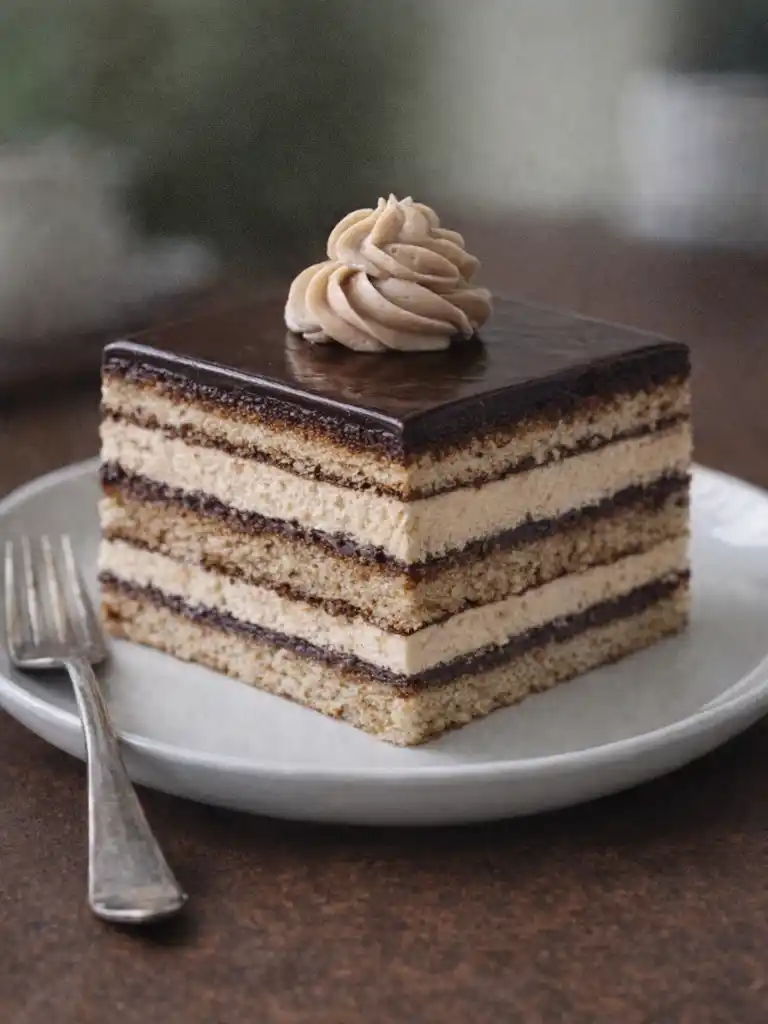
Step 1: Make the Joconde Almond Sponge
Preheat oven to 220C (425F) and line two baking sheets with parchment. Beat whole eggs, almond flour, and powdered sugar on high for 5 full minutes until pale and tripled in volume. Fold in the all-purpose flour gently, then fold in separately whipped egg whites in two additions using as few strokes as possible. Drizzle in cooled melted butter, fold three or four times, spread 4 to 5mm thin across both sheets, and bake 7 to 9 minutes until just set. Cool completely.
Step 2: Make the Coffee Syrup
Combine hot water, caster sugar, and espresso powder in a small saucepan over medium heat. Stir until sugar dissolves, about 2 minutes. Cool to room temperature before using.
Step 3: Make the Coffee Buttercream
Beat softened butter for 4 to 5 minutes until very pale. Add powdered sugar in three additions, then the cooled espresso, vanilla, and salt. Beat on high for 2 more minutes until completely smooth and light.
Step 4: Make the Chocolate Ganache
Pour hot cream over finely chopped chocolate, wait 90 seconds, then stir from the center outward until smooth. Add butter and stir until glossy. Cool at room temperature for 20 to 30 minutes until spreadable.
Step 5: Make the Chocolate Glaze
Same method as the ganache. After stirring smooth, add butter and corn syrup for a mirror-like finish. Cool to around 32 to 35C (90 to 95F) before pouring.
Step 6: Assemble Your Opera Cake Layer by Layer
Trim the Joconde sheets into three equal rectangles that fit your cake frame. Layer one into the frame, soak generously with coffee syrup, and spread buttercream evenly on top. Add the second layer, soak, then spread ganache. Add the third layer, soak, then spread the remaining buttercream. Refrigerate for 1 hour until firmly set. Pour the glaze over in one smooth pass and chill for at least 3 more hours, overnight if possible. To slice, warm your knife under hot water, dry it, and cut with one clean downward motion. Wipe and rewarm between every cut.
Pro Tips for Perfect Opera Cakes Every Time
The difference between a good opera cake and a great one comes down to a handful of small decisions made at the right moments. These six secrets are built into every step of this recipe, but they are worth calling out directly so nothing catches you off guard.
Use room temperature eggs and butter throughout. Cold ingredients do not incorporate properly and will affect both the sponge and the buttercream texture. Soak each sponge layer more generously than feels comfortable, an under-soaked Joconde turns dry and crumbly. Beat the buttercream longer than you think necessary. Let the ganache cool fully before spreading. And always use a warm dry knife for every single cut.
Common Mistakes to Avoid
The most common error with the Joconde is folding the egg whites too aggressively. A heavy hand deflates all the air you worked to build. Use light, slow strokes and accept that a few small streaks of white are better than a dense, flat sponge.
Spreading the glaze too slowly is another one. The moment warm glaze hits a cold buttercream surface it begins to set. One confident, smooth pass with your offset spatula is always better than several hesitant ones going back and forth.
Rushing the chilling time between assembly and glazing is the third mistake most people make. That hour in the refrigerator is not optional. Skip it and the glaze sinks straight into the buttercream.
Make Ahead and Meal Prep Tips
Opera cake is genuinely better made a day ahead. The coffee syrup absorbs fully into the sponge overnight, the layers settle, and the flavors deepen considerably. Assemble and glaze the day before serving, cover loosely with plastic wrap, and refrigerate until ready to slice.
If you want to spread the work across two days, make the Joconde, coffee syrup, buttercream, and ganache on day one. Assemble, glaze, and refrigerate on day two. Everything holds well between steps as long as the buttercream and ganache are stored covered at room temperature and used within 24 hours.
Beautiful Opera Cake Variations Worth Trying
Once you have made the classic version, the structure of this cake adapts remarkably well to other flavor combinations. The layering method stays exactly the same. What changes is what goes inside.
Gluten Free Opera Cake
Replace the all-purpose flour in the Joconde with a fine rice flour or a gluten free plain flour blend at a one to one ratio. The sponge comes out slightly more delicate but still holds together cleanly when sliced. Every other component in this recipe is naturally gluten free as written.
Nut Free Opera Cake
Replace the almond flour with an equal weight of plain all-purpose flour. The sponge will be less nutty and slightly denser, but the coffee and chocolate layers carry more than enough flavor to make it worthwhile. A good option for anyone managing a nut allergy without wanting to miss out on one of the most beautiful sweets in the patisserie world.
Raspberry and Dark Chocolate Twist
Swap the coffee syrup for a raspberry syrup made by simmering fresh raspberries, sugar, and water together until the sugar dissolves. Replace the coffee buttercream with a raspberry buttercream using freeze dried raspberry powder in place of the espresso. Keep the dark chocolate ganache exactly as written. The result is tart, rich, and visually stunning in every single slice.
If the raspberry variation caught your attention, you will love these Raspberry Mille-Feuille Cookies, another French patisserie classic that brings the same elegant flavor combination in a completely different form.
How to Store Opera Cake
Store opera cake in the refrigerator, covered loosely with plastic wrap or in an airtight container. It keeps well for up to 3 days, and the flavor genuinely improves after the first 24 hours as the coffee syrup finishes absorbing into the sponge.
For longer storage, opera cake freezes well before glazing. Wrap the assembled unglazed cake tightly in plastic wrap and freeze for up to one month. Thaw overnight in the refrigerator, then glaze and serve as normal. Do not freeze after glazing as the chocolate surface will crack during thawing.
Serving Suggestions: Cake and Sweets Pairings
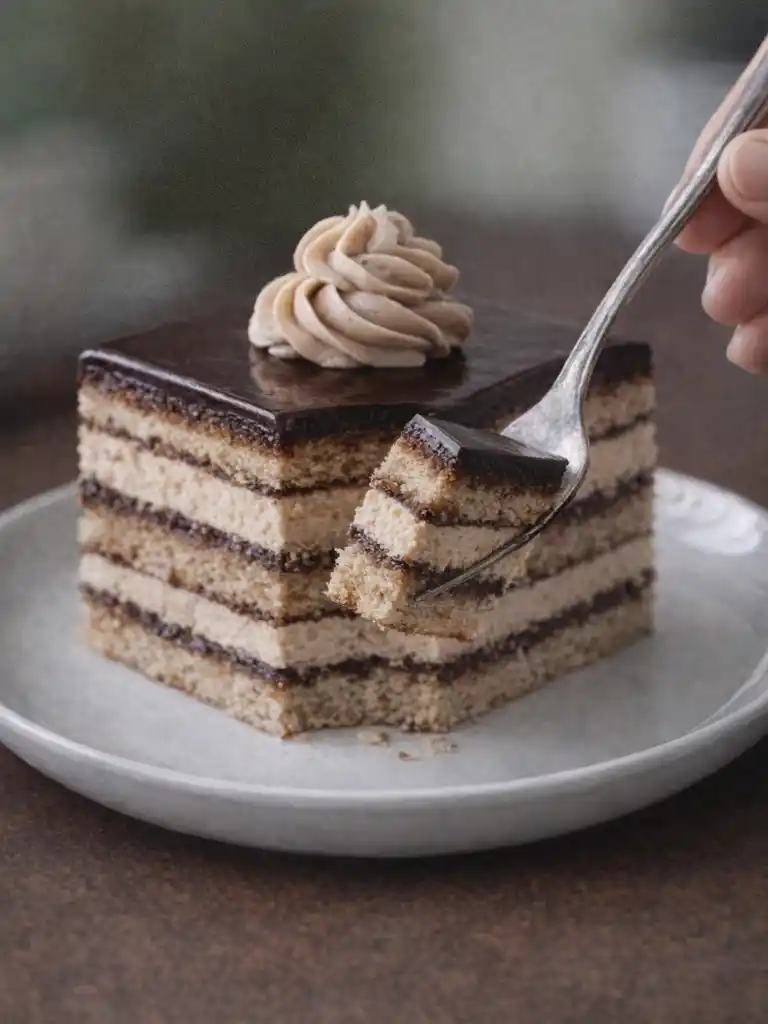
Opera cake is rich and layered, so everything you serve alongside it should be simple and light. A small strong espresso is the classic pairing and genuinely the best one. The bitterness cuts through the sweetness of the buttercream in a way nothing else quite matches.
What to Serve Alongside Opera Cake
For a wider dessert spread, opera cake sits beautifully next to fresh raspberries or strawberries, a light vanilla panna cotta, or a small scoop of vanilla bean ice cream. These work alongside it without competing with the ganache and buttercream. If you are serving it at a celebration, a glass of champagne is a surprisingly good match. The acidity and bubbles balance the richness of every layer.
How to Present It
Slice it cold and plate it cleanly. One clean slice on a white plate with nothing added is usually all it needs. If you want to add something visual, a few fresh raspberries or a light dusting of cocoa powder along one edge keeps it looking like it came from a proper patisserie window.
Nutritional Information
These figures are per serving based on 12 slices.
Calories: Approximately 420 kcal
Total Fat: 28g
Saturated Fat: 15g
Carbohydrates: 38g
Sugar: 30g
Protein: 6g
Fibre: 2g
Opera cake is an indulgent dessert by nature. It contains nuts, gluten, dairy, and eggs. See the variations section above for gluten free and nut free adaptations.
Opera Cake FAQs
What is opera cake made of?
Opera cake is made from a Joconde almond sponge, coffee syrup, coffee buttercream, chocolate ganache, and a chocolate glaze. These are layered in a specific sequence to create the thin, precise layers this simple traditional cake is known for.
What is the difference between opera cake and other layer cakes?
Most layer cakes use thick sponge and heavy frosting. Opera cake uses deliberately thin, precisely applied layers of sponge, buttercream, and ganache. It sits much closer in spirit to the world of cake and pastries than to everyday baking, which is why it belongs firmly in the category of cakes fancy patisseries are built around.
How does Paul Hollywood make opera cake?
Paul Hollywood opera cake follows the classical French method closely. He insists on whipping egg whites separately for the Joconde, using a properly made coffee syrup, and controlling the ganache temperature before spreading. His approach is uncompromising and produces a result very close to what you would find in a Parisian patisserie.
Can I make opera cake ahead of time?
Yes, and it is actually recommended. This recipe for opera cake tastes better after resting overnight in the refrigerator. The coffee syrup absorbs fully into the sponge and the flavors across every layer deepen considerably. Make it the day before, glaze it, and refrigerate until ready to serve.
How long does opera cake last in the fridge?
Opera cake keeps well for up to 3 days covered loosely in the refrigerator. The flavor peaks around day two, making it one of the rare desserts that genuinely rewards being made in advance.
Can I make opera cake without almond flour?
Yes. Replace the almond flour with an equal weight of plain all-purpose flour for a nut free version. The sponge will be slightly denser but this recipe for opera cake still works well, with the coffee and chocolate doing most of the heavy lifting in every bite.
What do you serve with opera cake?
A strong espresso is the classic and best pairing. For a broader spread of cake and sweets, fresh berries, vanilla ice cream, or a light panna cotta all complement it without competing with the richness of the ganache and buttercream.
“If coffee desserts are your thing, our Easy Tiramisu is the next recipe to bookmark. Same deep coffee flavor, a completely different texture, and just as impressive on the table.”
Conclusion
Opera cake is the kind of recipe that rewards you twice. Once when you see those layers come together during assembly, and again when you slice into it and realize you actually pulled it off.
It takes time and asks for your full attention at every stage. But every component is straightforward on its own, and the six secrets woven through this recipe handle the moments where most bakes go wrong.
Whether this cake craving started with a patisserie window, a baking show, or simply the desire to make something truly special, this is the recipe that delivers. Make it once and it will not be the last time.
“Ready for your next showstopper? Our Italian Lemon Cream Cake brings the same elegant, layered approach with a bright citrus twist that is genuinely hard to resist.”
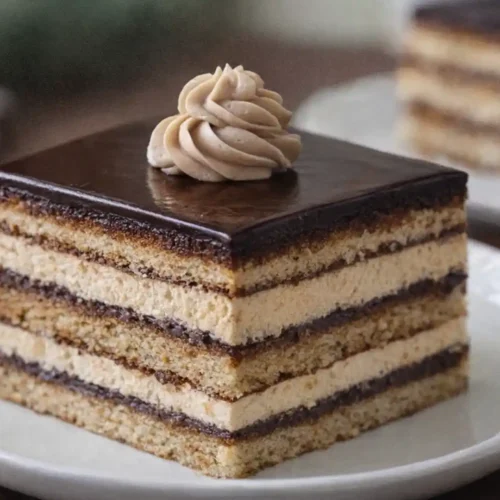
Opera Cake: 6 Secrets to a Perfect Classic

Equipment
- Two large rimmed baking sheets
- Parchment paper
- Stand mixer or electric hand mixer
- Offset spatula
- Rectangular cake frame or deep rectangular pan (20x30cm / 8×12 inches)
- Fine Mesh Sieve
- Small saucepan
- Heatproof bowls
- Pastry Brush
- Sharp knife and ruler
- Digital kitchen thermometer (optional)
- Bench scraper (optional)
Ingredients
Joconde Almond Sponge
- 4 large eggs room temperature
- 3 egg whites room temperature
- 125 g almond flour blanched, finely ground
- 125 g powdered sugar sifted
- 35 g all-purpose flour sifted
- 30 g unsalted butter melted and cooled
- 20 g caster sugar for whipping the egg whites
- 1 pinch salt
Coffee Syrup
- 120 ml hot water
- 80 g caster sugar
- 2 tbsp instant espresso powder or 2 shots of strong brewed espresso
Coffee Buttercream
- 225 g unsalted butter softened to room temperature
- 240 g powdered sugar sifted
- 3 tbsp strong brewed espresso cooled completely
- 1 tsp vanilla extract
- 1 pinch salt
Chocolate Ganache
- 200 g dark chocolate 70% cocoa, finely chopped
- 160 ml heavy cream full-fat
- 20 g unsalted butter room temperature
Chocolate Glaze
- 150 g dark chocolate finely chopped
- 120 ml heavy cream full-fat
- 20 g unsalted butter room temperature
- 1 tbsp light corn syrup or golden syrup for mirror-like finish
Instructions
- Make the Joconde Almond Sponge: Preheat your oven to 220C (425F). Line two large baking sheets with parchment paper and lightly grease the surface. Beat the whole eggs, almond flour, and powdered sugar on high speed for a full 5 minutes until the mixture is very pale, thick, and has roughly tripled in volume. Sift in the all-purpose flour and fold in gently using slow strokes from the bottom of the bowl upward.
- In a separate clean bowl, beat the egg whites with a pinch of salt until foamy. Add the caster sugar gradually and beat to firm, glossy peaks. Fold one third into the almond mixture to loosen it, then fold in the rest in two additions using as few strokes as possible. Drizzle in the cooled melted butter and fold with three or four strokes until just combined. Divide the batter between the two prepared sheets and spread into a thin, even layer about 4 to 5mm thick. Bake each sheet for 7 to 9 minutes until just set and lightly golden at the edges. Cool completely before handling.
- Make the Coffee Syrup: Combine the hot water, caster sugar, and espresso powder in a small saucepan over medium heat. Stir until the sugar dissolves completely, about 2 minutes. Remove from heat and cool to room temperature before using.
- Make the Coffee Buttercream: Beat the softened butter on medium high speed for 4 to 5 minutes until very pale and fluffy. Add the sifted powdered sugar in three additions, beating well between each. Add the cooled espresso, vanilla extract, and salt, then beat on high for 2 more minutes until completely smooth and light. Set aside at room temperature.
- Make the Chocolate Ganache: Place the finely chopped dark chocolate in a heatproof bowl. Heat the cream in a small saucepan until it just begins to simmer at the edges, then pour directly over the chocolate. Leave without stirring for 90 seconds, then stir from the center outward in slow circles until completely smooth. Add the butter and stir until incorporated. Cool at room temperature for 20 to 30 minutes until spreadable.
- Make the Chocolate Glaze: Use the same method as the ganache. Pour hot cream over the chopped chocolate, wait 90 seconds, then stir until smooth. Add the butter and corn syrup and stir until glossy. Cool to around 32 to 35C (90 to 95F) before pouring.
- Assemble the Opera Cake: Trim the baked Joconde sheets into three equal rectangles that fit your cake frame. Place the first rectangle into the base of the frame. Soak generously with coffee syrup using a pastry brush, then spread an even layer of coffee buttercream on top. Place the second rectangle on top, soak again with coffee syrup, then spread an even layer of chocolate ganache. Place the third rectangle on top, soak with the remaining coffee syrup, then spread the remaining coffee buttercream evenly across the surface. Refrigerate for at least 1 hour until all layers are firmly set.
- Glaze and Finish: Pour the cooled chocolate glaze over the top surface and use your offset spatula in one smooth, confident pass to spread it evenly to the edges. Return the cake to the refrigerator for a minimum of 3 hours, or overnight for best results. To serve, remove the cake frame carefully. Warm your knife under hot water, dry it, and slice with one clean downward motion per cut. Wipe and rewarm the knife between every slice for sharp, clean edges.
Notes
- Use room temperature eggs and butter throughout. Cold ingredients affect both the sponge texture and buttercream consistency.
- Soak each sponge layer more generously than feels comfortable. An under-soaked Joconde turns dry and crumbly.
- Beat the buttercream for the full 4 to 5 minutes before adding sugar. This is what removes graininess and creates a silky finish.
- Let the ganache cool fully before spreading. Warm ganache will melt the buttercream layer beneath it.
- Spread the glaze in one confident pass. Once it hits the cold buttercream surface it begins to set quickly.
- Always use a warm, dry knife for slicing. Wipe and rewarm between every cut for clean, sharp edges.
- Opera cake tastes significantly better made a day ahead. The coffee syrup absorbs fully overnight and the flavors deepen across every layer.
For more creative cooking & baking inspiration ideas, explore Pinterest or connect with us on Facebook.